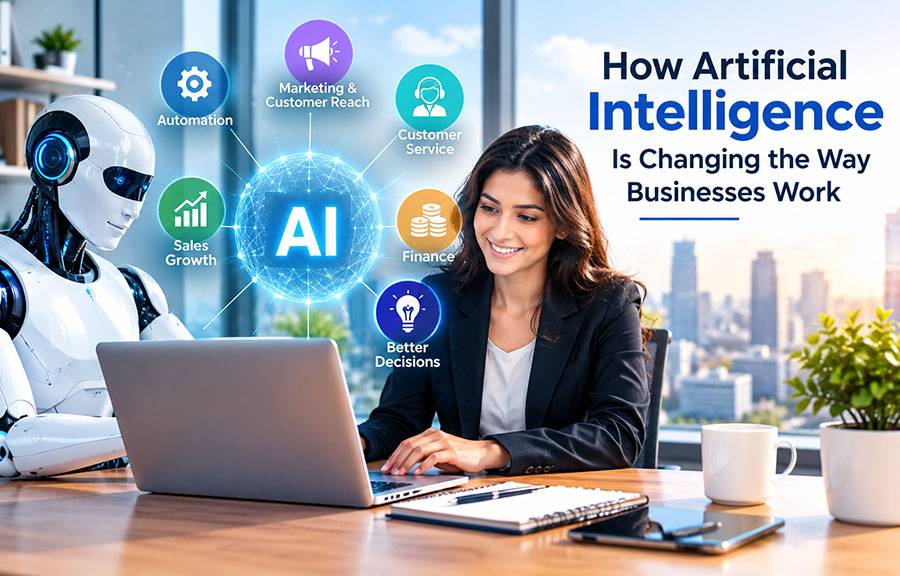
How Artificial Intelligence Is Changing the Way Businesses Work
Artificial intelligence (AI) is no longer a futuristic concept confined to science fiction; it is actively reshaping how organizations operate on a daily basis. From small independent startups to multinational corporations, businesses are using AI tools to streamline repetitive tasks, analyze complex data sets, improve customer engagement, and build more resilient business models.
If you have ever used an automated chatbot to track a delivery, received a personalized recommendation on an e-commerce platform, or used smart spelling suggestions in an email draft, you have already interacted with business AI. However, behind these everyday conveniences lies a deeper shift: AI is changing how decisions are made, how teams collaborate, and how value is created across almost every industry.
1. Automating Routine Operations and Boosting Productivity
One of the immediate impacts of artificial intelligence is the automation of mundane, repetitive tasks. In traditional workflows, employees spend a significant portion of their workday handling manual data entry, scheduling meetings, sorting emails, and verifying documentation.
AI-driven automation platforms handle these repetitive workflows instantly and accurately, freeing human staff to focus on creative problem-solving, strategic planning, and relationship-building.
Key operational areas transformed by AI automation:
- Customer Support: AI virtual assistants handle high volumes of routine inquiries 24/7, escalating complex cases to human support representatives.
- Document Processing: Intelligent document extraction reads invoices, receipts, and contracts in seconds, drastically reducing manual data entry errors.
- Workflow Scheduling: Intelligent calendars optimize meeting times across teams and dynamic time zones without back-and-forth emails.
2. Smarter Decision-Making Through Predictive Analytics
In the past, business leaders relied heavily on historical reports, intuition, and trial-and-error when planning for the future. Today, machine learning models analyze massive streams of real-time data to identify patterns that humans might easily miss.
Predictive analytics enables companies to anticipate market shifts, forecast supply demands, and evaluate risk long before issues occur in real-time operations.
| Business Function | Traditional Approach | AI-Powered Approach |
|---|---|---|
| Inventory Management | Manual audits based on past quarter sales | Real-time demand forecasting based on trends, weather, and market conditions |
| Fraud Detection | Periodic manual reviews after transactions occur | Instant detection of suspicious behavior patterns during transaction execution |
| Target Marketing | Broad demographic segmenting | Hyper-personalized recommendations tailored to individual behavioral history |
| Maintenance | Fixed calendar schedule repairs | Predictive maintenance alerts triggered right before equipment breaks down |
3. Revolutionizing Customer Experience (CX)
Today’s consumers expect quick answers, round-the-clock service, and tailored recommendations. AI allows companies to meet these expectations without overwhelming their customer success teams.
Generative AI and natural language processing (NLP) allow brands to deliver human-like conversational experiences across chat, email, and social messaging channels. Furthermore, recommendation engines analyze user preferences to present relevant products and helpful articles at the right moment.
4. Transforming Human Resources and Recruitment
Hiring and talent management are undergo modern changes through AI integrations. HR teams use intelligent screening systems to scan hundreds of resumes, identify top candidates based on skill match, and coordinate interviews smoothly.
Once employees are hired, AI-powered learning portals can recommend custom skill development pathways tailored to each individual's career goals and workplace performance indicators.
5. How AI Is Changing Key Industries
Retail and E-commerce
Retailers utilize AI for dynamic pricing strategies, personalized marketing, visual product search, and automated inventory logistics to ensure popular items remain in stock.
Finance and Banking
Financial institutions rely on algorithms for algorithmic trading, credit scoring accuracy, automated loan approvals, and real-time fraud mitigation.
Healthcare and Pharmaceuticals
Hospitals and laboratories leverage machine learning models to analyze medical imaging faster, assist doctors in early diagnostics, and accelerate medical research.
Human + AI: A Collaborative Future, Not Total Replacement
A common concern is whether artificial intelligence will replace human jobs entirely. While AI certainly automates specific tasks, its most effective role is that of a powerful tool that enhances human talent rather than replacing it.
The future of work is collaborative. Employees who learn how to use AI tools—whether for writing better copy, analyzing sales figures, or coding software—will be vastly more productive and positioned well for future career growth.
Key Challenges Businesses Face with AI Adoption
- Data Quality & Privacy: AI models rely on reliable data. Poor data leads to inaccurate conclusions, and handling consumer data requires strict adherence to privacy rules.
- Implementation Costs: Initial investment in specialized tools, cloud infrastructure, and team training can be significant for small businesses.
- Ethical Considerations & Bias: AI models learn from existing data, which means algorithms can inadvertently reflect or amplify underlying biases if not monitored carefully.
- Change Management: Helping employees adapt to new software workflows and overcoming reluctance to change requires proactive training and clear communication.
Frequently Asked Questions
How can small businesses start using AI on a budget?
Small businesses can start small by utilizing software they already use that has built-in AI features—such as email marketing tools with AI content generators, lightweight chatbots for customer service, or smart accounting platforms.
Will artificial intelligence replace human employees?
AI replaces repetitive tasks rather than entire human roles. It alters job responsibilities, allowing human workers to concentrate on higher-level problem solving, strategy, and genuine human interaction.
Is AI safe for business data confidentiality?
Safety depends on implementation. Companies should choose reputable vendors, establish strong cybersecurity policies, and avoid uploading confidential business data into publicly accessible AI platforms without data protections in place.
Final Thoughts: Embracing the Future of Work
Artificial intelligence is not just a passing trend; it is a fundamental evolution in how business operations are designed and executed. Organizations that embrace AI thoughtfully—focusing on customer value, worker empowerment, and operational efficiency—will be best equipped to thrive in an increasingly digital marketplace.
Whether you are an enterprise executive, a small business owner, or an ambitious professional, understanding how AI operates and integrating it into your workflow is one of the most impactful investments you can make for the future.