
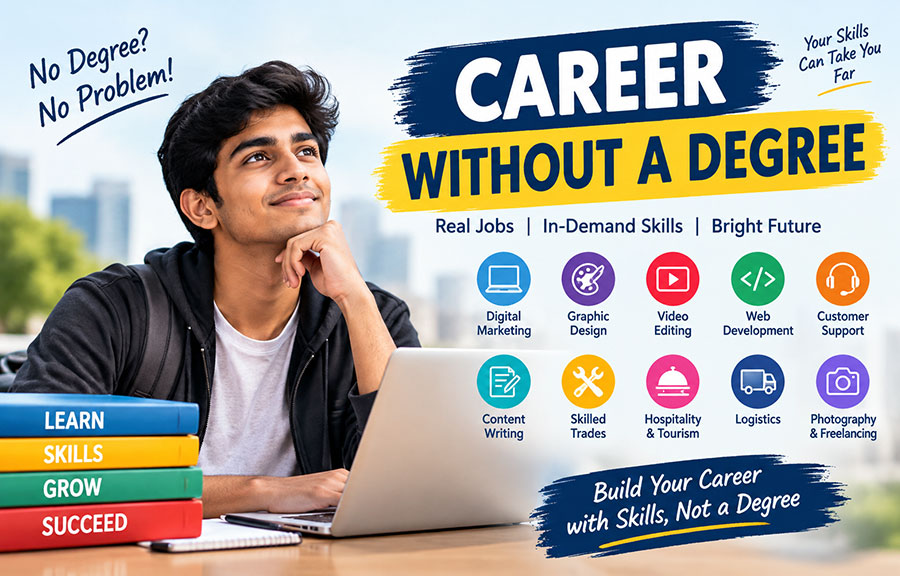
Career Without a Degree in India: Practical Jobs, Skills and Opportunities
You can build a meaningful career without a college degree. A degree is essential for some professions, but many employers and clients also value practical ability, reliability, communication, a strong portfolio, and real work experience. If college is not possible right now—or you simply prefer learning by doing—you still have options worth exploring.
This guide to careers without a degree in India explains realistic paths in technology, digital marketing, design, sales, customer support, skilled trades, hospitality, logistics, and self-employment. It also shows how to choose a skill, find trustworthy training, build proof of your ability, and apply for work without wasting money on unrealistic promises.
What Does “Career Without a Degree” Really Mean?
It usually means entering a field where a bachelor’s degree is not a universal requirement for every role. You may still need to complete Class 10 or 12, a short course, a recognised vocational qualification, an apprenticeship, a licence, or employer-specific training. Requirements differ by job, state, employer, and experience level.
Also, “no degree required” does not mean “no learning required.” Employers need evidence that you can do the work. That evidence might be a portfolio, a practical test, a certification, customer results, references, or experience gained through an internship or apprenticeship.
Best Career Options Without a Degree in India
There is no single best job for everyone. Use the options below to shortlist fields that match your interests, current skills, resources, and preferred working style.
1. Digital Marketing Executive
Digital marketing involves helping businesses reach customers online through search engines, social media, email, content, and paid campaigns. Some entry-level roles focus on execution and may consider candidates with practical skills rather than a specific degree.
- Useful skills: Writing, social media planning, basic analytics, keyword research, campaign reporting, and clear communication.
- How to start: Learn the basics, practise with a personal page or a local business project, and create a small portfolio showing sample posts, a content calendar, and results where available.
- Possible roles: Social media assistant, SEO trainee, content coordinator, digital marketing assistant, or advertising operations trainee.
- Reality check: A certificate alone rarely proves ability. Learn to explain what you did, why you did it, and what you measured.
2. Graphic Designer
Graphic designers create visual material such as social posts, posters, brochures, advertisements, thumbnails, and brand assets. Employers and clients often want to see the quality of your work, so a focused portfolio can be especially valuable.
- Useful skills: Layout, typography, colour, visual hierarchy, design fundamentals, and tools such as Canva or professional design software.
- How to start: Create six to ten original sample designs for different imaginary or real-world briefs. Show the problem, your design choices, and the final result.
- Possible roles: Junior designer, production artist, social media designer, thumbnail designer, or freelance designer.
- Reality check: Competition can be strong. Learn design fundamentals instead of relying only on templates, and respect copyright and client brand guidelines.
3. Video Editor and Short-Form Content Editor
Creators, agencies, educators, and businesses use video for social media, product demonstrations, interviews, and explainers. Video editing may be a practical option if you enjoy storytelling and working with visual details.
- Useful skills: Cutting footage, pacing, audio cleanup, captions, basic colour correction, file management, and understanding the intended audience.
- How to start: Make a short showreel with a few different styles, using footage you own or are permitted to use. Clearly label practice projects as samples.
- Possible roles: Assistant video editor, reels editor, YouTube editor, or freelance editor.
- Reality check: Check your computer or phone capability, storage, software costs, deadlines, and revision expectations before accepting paid work.
4. Web Developer or Website Builder
Web development is about creating and maintaining websites. Some junior, freelance, and small-business opportunities focus on demonstrated skills, though many employers may prefer a degree for particular roles.
- Useful skills: HTML, CSS, JavaScript fundamentals, responsive design, debugging, accessibility basics, and version control.
- How to start: Build a personal portfolio, a small business website, and one interactive project. Make sure your work functions on mobile screens and explain what you built yourself.
- Possible roles: Website assistant, junior front-end developer, website maintenance support, or freelance website builder.
- Reality check: Do not claim to be job-ready after watching a few tutorials. Practise troubleshooting, learn the basics properly, and keep projects accessible for review.
5. IT Support and Computer Technician
IT support workers help people solve everyday computer, software, account, printer, and network problems. Hardware repair and technical support can suit people who like diagnosing issues and explaining solutions patiently.
- Useful skills: Operating systems, basic networking, safe troubleshooting, hardware fundamentals, documentation, and customer service.
- How to start: Practise on devices you own or have permission to service, learn safe handling, and look for supervised trainee roles or credible technical training.
- Possible roles: Help-desk trainee, desktop support assistant, computer service technician, or repair-shop assistant.
- Reality check: Never access someone’s files or accounts without permission. Some employers require formal qualifications or certifications, especially for specialised work.
6. Sales and Business Development
Sales roles involve understanding a customer’s needs, explaining a product or service, following up, and helping a business win and retain customers. Communication, listening, and consistency can matter greatly.
- Useful skills: Clear speaking, product knowledge, negotiation, follow-up, record keeping, and ethical customer handling.
- How to start: Look for trainee roles with transparent pay terms, structured training, and a clearly described product or service.
- Possible roles: Retail sales associate, inside-sales trainee, business development representative, or customer relationship assistant.
- Reality check: Ask whether pay includes fixed salary, incentives, targets, travel costs, and deductions. Avoid roles that hide the terms or pressure you to pay for a job.
7. Customer Support and Customer Success
Customer support teams help customers through phone, email, chat, or in-person service. Some employers hire based on communication, language ability, computer familiarity, and problem-solving rather than a degree alone.
- Useful skills: Listening, professional writing, patience, typing, basic spreadsheets, and following support procedures.
- How to start: Practise writing clear replies to common customer questions and learn to use spreadsheets and basic workplace tools.
- Possible roles: Customer care executive, chat support associate, service desk trainee, or customer operations assistant.
- Reality check: Check shift timings, transport, language requirements, workplace safety, and whether a work-from-home offer is genuine.
8. Content Writing and Copywriting
Content writers prepare articles, product descriptions, website pages, newsletters, scripts, and other written material. Copywriters focus more directly on persuasive messages for marketing and sales. Strong writing and research can help you demonstrate ability without relying only on formal credentials.
- Useful skills: Grammar, research, clear structure, audience awareness, editing, fact-checking, and basic SEO.
- How to start: Write three to five original samples in a niche you understand. Show sources for factual claims and tailor each sample to its intended audience.
- Possible roles: Content assistant, junior copywriter, product-description writer, scriptwriter, or freelance writer.
- Reality check: Learn to verify facts and edit carefully. Do not copy other writers’ work or submit unreviewed AI-generated text as original expertise.
9. Skilled Trades and Technical Work
Electrician work, plumbing, air-conditioning and refrigeration servicing, automotive repair, welding, and other trades can provide practical career paths. These fields often require hands-on training, supervised experience, and compliance with applicable safety rules.
- Useful skills: Practical problem-solving, measurement, tool handling, customer communication, and safety awareness.
- How to start: Investigate recognised vocational programmes, Industrial Training Institutes (ITIs), apprenticeships, and reputable employers offering supervised training.
- Possible roles: Trade apprentice, technician helper, maintenance assistant, workshop trainee, or—after suitable training and any required permissions—an independent service provider.
- Reality check: Electrical, gas, refrigeration, and other hazardous work should not be attempted without appropriate training, supervision, and legal authorisation where required.
10. Hospitality, Food Service, and Tourism
Hotels, restaurants, catering companies, cafés, and travel businesses hire for a variety of operational and customer-facing roles. Employers may prioritise service attitude, reliability, communication, and role-specific training.
- Useful skills: Customer service, teamwork, hygiene, time management, basic food safety, and communication.
- How to start: Apply for trainee positions with clear duties and training, or consider a reputable short vocational programme that includes practical experience.
- Possible roles: Restaurant service associate, kitchen trainee, front-office assistant, housekeeping associate, or event operations assistant.
- Reality check: Understand shift patterns, weekly rest, accommodation terms if offered, and the full pay structure before accepting a position.
11. Logistics, Warehouse, and Delivery Operations
Retailers, manufacturers, courier companies, and e-commerce businesses need people to support inventory, dispatch, order processing, delivery, and warehouse operations. Entry requirements vary by role.
- Useful skills: Accuracy, punctuality, basic digital tools, inventory records, teamwork, and following safety procedures.
- How to start: Look for warehouse associate, dispatch assistant, inventory assistant, or operations trainee openings through verified employers.
- Possible roles: Picker and packer, inventory assistant, dispatch coordinator trainee, or logistics support associate.
- Reality check: For driving or delivery work, verify the licence, vehicle, insurance, safety, fuel, and payment requirements. Calculate expenses before judging the take-home income.
12. Beautician, Makeup Artist, or Hair Stylist
Beauty and personal-care services can suit people who enjoy hands-on work and building relationships with clients. Training, hygiene, practice, and a record of satisfied customers can help establish credibility.
- Useful skills: Technique, sanitation, consultation, time management, product knowledge, and client care.
- How to start: Compare course quality and practical hours, practise under appropriate supervision, and build a portfolio only with the client’s consent.
- Possible roles: Salon trainee, junior stylist, makeup assistant, or independent service provider after developing sufficient competence.
- Reality check: Include equipment, products, travel, rent, and repeat-customer development when estimating self-employment income.
13. Photography
Photography may lead to work in events, products, portraits, food, property, or content production. It is a competitive field, and clients generally need to see examples of your work.
- Useful skills: Composition, lighting, editing, planning, file backup, and working respectfully with clients.
- How to start: Practise with available equipment, develop a focused portfolio, and assist an experienced photographer to understand real assignments.
- Possible roles: Photography assistant, product photography trainee, event assistant, or freelance photographer.
- Reality check: Do not buy expensive equipment on borrowed money before testing your interest and understanding local demand.
14. Entrepreneurship and Freelancing
Freelancing means providing a service to clients, while entrepreneurship can involve selling a product or running a small business. Examples include design, website setup, repairs, tutoring in subjects you know well, photography, or local digital services.
- Useful skills: A service people need, pricing, communication, record keeping, basic marketing, and managing deadlines.
- How to start: Choose one specific service, create sample work, speak with potential customers, agree on scope and payment in writing, and start with manageable projects.
- Possible routes: Independent freelancer, local service provider, online seller, or small-business owner.
- Reality check: Income can be irregular. Account for taxes where applicable, platform fees, equipment, cancellations, unpaid time, and customer acquisition.
Which Careers Without a Degree May Suit You?
Use this quick guide to connect your preferences with fields to investigate. It is a starting point, not a guarantee of employment.
- If you enjoy computers: Explore IT support, website building, web development, or digital operations.
- If you are creative: Consider graphic design, video editing, photography, content writing, or makeup artistry.
- If you enjoy talking to people: Explore sales, customer support, retail, hospitality, or client-facing services.
- If you like practical, hands-on work: Investigate technical trades, automotive service, repair work, or maintenance training.
- If you want to work independently: Build a service-based freelance business only after developing a skill and validating customer demand.
- If you need a more structured entry route: Look into apprenticeships, recognised vocational programmes, trainee jobs, and employer-provided training.
How to Start a Career Without a Degree: A Practical 90-Day Plan
You do not need to master everything at once. A focused plan can help you move from exploring options to showing employers what you can do.
- Days 1–7: Choose one direction. Pick two possible fields, read actual job descriptions, note the skills employers request, and speak with someone who works in the field if possible.
- Days 8–30: Learn the fundamentals. Use credible free or affordable learning resources. Set a weekly schedule and practise, rather than watching lessons passively.
- Days 31–50: Build proof. Complete two or three projects, a sample portfolio, a practical demonstration, or supervised practice relevant to the job.
- Days 51–60: Prepare to apply. Create a clear one-page CV, list your projects and skills honestly, and practise explaining how you solved a problem.
- Days 61–90: Apply and improve. Apply to suitable trainee and entry-level roles, ask for feedback, track applications, and keep improving your portfolio based on what employers ask for.
The timeline is flexible. Trades and regulated or technically demanding fields may require longer training, formal qualifications, supervised practice, or licences. Do not rush into paid work you are not yet equipped to perform safely.
How to Build Experience When No One Has Hired You Yet
The first opportunity can be the hardest to secure. You can still create evidence of your ability without pretending to have professional experience.
- Make sample projects: Design a sample campaign, build a demo website, edit a practice video, or document a troubleshooting exercise using equipment you are allowed to use.
- Volunteer selectively: If you choose to help a community group or small organisation, agree on the work, time commitment, and permission to show the result.
- Look for apprenticeships and trainee roles: These can offer structured learning and supervised workplace experience. Check the employer and the terms carefully.
- Ask for specific feedback: Request comments on accuracy, presentation, speed, customer communication, or another skill relevant to the role.
- Keep a work log: Record what you completed, the tools used, the problems solved, and measurable outcomes when available.
Do You Need a Certificate or Diploma?
Not always, but a relevant and credible qualification can help in some fields. The right choice depends on what employers, clients, and regulators expect. A short course may help you learn a skill; it does not automatically guarantee a job or replace a qualification legally required for a profession.
Before enrolling, check the course syllabus, practical hours, trainer experience, total fees, refund policy, assessment method, and independent reviews. Ask for verifiable placement data rather than relying on promotional claims. For trades and regulated work, confirm recognition and licensing requirements with the relevant official body.
How to Find Jobs Without a Degree
- Search by skill and role: Try terms such as “trainee,” “junior,” “apprentice,” “portfolio,” “customer support,” or the specific tool or trade you know.
- Read the full requirements: Some employers accept equivalent skills or experience; others strictly require a degree. Do not assume the same rule applies to every vacancy.
- Tailor your CV: Put relevant skills, projects, training, and work samples near the top. Be truthful about your experience and qualifications.
- Use more than one route: Check verified company career pages, reputable job portals, local employers, training providers, and professional networks.
- Prepare for practical tests: You may be asked to write a response, solve a technical problem, demonstrate a tool, or role-play a customer interaction.
- Track your applications: Record the company, role, date, contact, next step, and any feedback so you can improve your approach.
Beware of Fake Jobs and Unrealistic Promises
People looking for their first job can be targeted by scams. Be cautious if a recruiter promises a guaranteed job or unusually high income with little work, pressures you to pay immediately, or refuses to explain the role.
- Do not pay a recruiter or unknown person merely to secure a job offer without independently verifying the arrangement.
- Never share an OTP, banking password, or other sensitive account credentials with a recruiter.
- Verify the company, official contact details, written offer, job duties, salary structure, and work location.
- For work-from-home offers, investigate any request to buy a starter kit, transfer money, or deposit a cheque and return part of it.
- Read contracts before agreeing to training bonds, deductions, commissions, or unpaid trial work.
Salary Expectations: What Should You Know?
There is no reliable single salary figure for “jobs without a degree.” Pay varies with the city, employer, type of work, practical ability, language skills, experience, shift pattern, and whether the role is salaried or freelance. Some entry-level roles pay modestly while you learn; specialised skills and a strong track record may improve opportunities over time, but higher earnings are never guaranteed.
When comparing offers, look at take-home pay, incentives, travel and equipment costs, working hours, benefits, stability, and opportunities to learn. For freelance work, separate revenue from profit and account for the time spent finding clients and revising work.
Can You Study Later or Complete a Degree While Working?
Yes. Starting work does not have to close the door to further education. Depending on your circumstances and the recognition rules, you may later consider open or distance learning, part-time study, a diploma, a recognised vocational qualification, or a degree. Check whether the programme is officially recognised and whether its schedule fits your work and personal responsibilities.
A degree can open doors in fields where it is required, so avoid treating education and skills as competing choices. You can build practical experience now and continue studying when it makes sense for your goals.
Common Mistakes to Avoid
- Learning too many skills at once: Focus on one skill set long enough to produce credible work.
- Collecting certificates without practice: Projects and demonstrated competence matter, too.
- Expecting instant high income: Most people need time to learn, build trust, and gain experience.
- Ignoring communication: Reliability, clear updates, teamwork, and professional behaviour can affect job performance.
- Spending heavily before testing a field: Start with accessible resources and verify demand before making large purchases.
- Accepting unsafe or unclear work: Check training, contracts, safety practices, and payment terms.
- Giving up after a few rejections: Review the roles you apply for, improve your evidence of skill, and ask for useful feedback.
Frequently Asked Questions
Can I get a job in India without a degree?
Yes. Some employers hire for entry-level, service, sales, creative, technical support, operational, and trade roles without requiring a bachelor’s degree. Requirements vary, and you may still need Class 10 or 12, training, experience, a licence, or another qualification.
Which is the best career without a degree?
There is no universal best option. Digital work, design, sales, customer support, technical trades, hospitality, and logistics suit different people. Compare the work itself, training cost, local demand, eligibility, working conditions, and your interest before choosing.
Can I work in IT without a degree?
Some IT support, website, development, and digital roles consider candidates who can demonstrate the required skills. Other employers require a degree or particular certifications. Build projects, learn the fundamentals, and read each job description carefully.
Can I earn online without a degree?
It is possible to earn through legitimate freelance services or remote employment, but online work is not guaranteed or automatically easy. You need a marketable skill, proof of ability, client or employer trust, and awareness of scams.
Are short-term courses worth it?
They can be useful when the course teaches a relevant skill through practice at a reasonable cost. Check the provider, curriculum, practical work, recognition where relevant, and outcomes before paying. A certificate by itself does not guarantee employment.
Can I get a government job without a degree?
Some government recruitment notifications allow candidates with Class 10, Class 12, or specified vocational qualifications, while other posts require graduation or a professional qualification. Check the latest official notification for age limits, eligibility, exams, physical standards, and application dates.
Should I choose a job or continue studying?
Consider your finances, responsibilities, long-term goals, and the qualifications required in your chosen field. You might work first, study part-time, complete vocational training, or combine work with further education. Choose a route you can realistically sustain.
Final Thoughts
A college degree can be valuable, but it is not the only way to begin building a career. The practical route is to choose a field carefully, learn skills that employers or customers need, practise consistently, and show honest evidence of what you can do. Start small, stay curious, and keep improving as you gain experience.
Important note: Job requirements, wages, training recognition, licensing rules, and recruitment processes can change and vary by location. Verify details with the employer, official recruitment notice, recognised training provider, or relevant regulatory authority before paying fees or making a career decision.