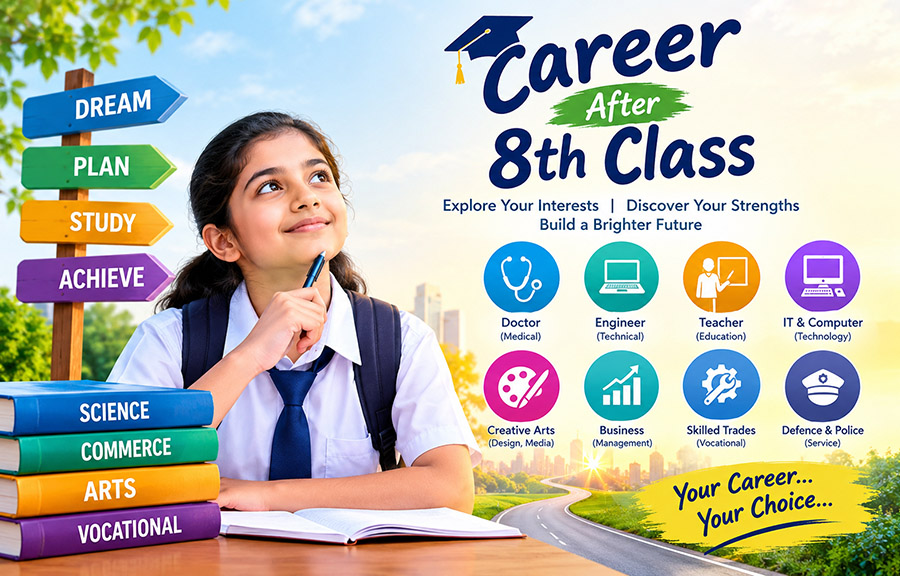
Career After 8th Class: Understanding Your Choices, Skill Training and Next Steps
Completing the 8th standard is a crucial transitional milestone for young students and their families. At this stage, many students begin thinking about their personal interests, strengths, and future livelihoods. While the conventional path for most students in India is to continue straight into the 9th grade, some youth and families look for early vocational training, skill-building programs, or specialized certifications. This guide from News i1 breaks down the available options, helping you make informed decisions tailored to individual talents and long-term goals.
Important: Educational policies, age criteria, and vocational program requirements vary by region and institution. Always verify eligibility and course accreditation before enrolling. News i1 serves as an information and career-guidance portal and does not guarantee job placements or direct admissions.
Why Planning After 8th Class Matters
The middle school stage marks the transition toward more focused learning. Whether a student aims to complete regular high school, enter technical training streams later, or learn a practical trade, early awareness prevents confusion. Evaluating strengths in academics, hands-on work, or creative arts helps shape a confident path forward.
Path 1: Continuing Traditional Schooling (9th and 10th Grade)
For the vast majority of students, continuing with formal secondary education remains the most recommended baseline path. Finishing high school (Class 10 and Class 12) opens up wide doors for higher education, competitive exams, technical diplomas, and standard corporate or government careers.
- Strong Academic Foundation: Builds essential core knowledge in Mathematics, Science, Social Studies, and Languages.
- Eligibility for Future Jobs: A Class 10 (Matriculation) certificate is mandatory as a minimum educational qualification for almost all entry-level government and private sector positions.
- Wider Choices Later: Delaying final specialization gives students time to mature and discover what fields truly interest them before choosing Science, Commerce, or Arts in higher secondary school.
Path 2: Vocational Training and Skill Development Courses
For students who prefer practical, hands-on learning over heavy textbook study, various vocational institutes and government-backed skill initiatives offer entry-level certificate courses. These programs focus on practical trades rather than theory.
- Short-Term Certificate Courses: Programs offered via industrial training initiatives, community polytechnics, or non-profit skill centers covering basic electronics, tailoring, food production, or computer fundamentals.
- ITI Preparation (Future Bridge): While most Industrial Training Institute (ITI) courses require a 10th-pass qualification, certain pre-vocational or foundational certificate courses accept students post-8th grade, helping them transition into full ITI trades later.
- Artisanal and Traditional Crafts: Learning specialized handcrafts, textiles, woodworking, or automotive repair under experienced practitioners.
Note: Always check if a vocational certificate is recognized by national or state skill development councils (such as NSDC or state technical boards) to ensure it holds value in the job market.
Path 3: Open Schooling and Flexible Education
If a student faces financial constraints, personal challenges, or needs to balance learning with part-time work or family responsibilities, open schooling systems provide a viable alternative.
- National Institute of Open Schooling (NIOS): Offers flexible study options where students can pursue their secondary education at their own pace without attending daily regular brick-and-mortar classes.
- State Open Schools: Local board alternatives that offer flexible examination schedules for continuing education.
How Parents and Mentors Can Guide 8th-Grade Students
- Observe Natural Inclinations: Notice whether the student enjoys solving numerical problems, building things with their hands, drawing, or reading stories.
- Avoid Pressure: Do not force a career path based on peer pressure or social expectations. Match the child's aptitude with the right environment.
- Prioritize Basic Literacy and Numeracy: Even if a student leans toward practical trade work, strong reading, writing, and basic math skills are essential for career growth and professional communication.
- Keep Options Open: Encourage continuous learning so that the student can upgrade their qualifications later in life through open learning or evening classes.
Frequently Asked Questions About Career After 8th Class
Can I get a government job directly after completing the 8th grade?
Most standard government recruitments require at least a 10th or 12th pass qualification. Very few entry-level support or helper roles historically considered lower qualifications, but modern requirements almost universally mandate high school completion.
Are ITI courses open right after the 8th standard?
The majority of standard ITI trades require a 10th pass. However, a select few specialized or basic trades accept 8th-grade passes. Check the specific guidelines of your state's technical education board.
Is it a good idea to quit school after the 8th grade?
Quitting formal education entirely is generally discouraged. Basic high school education provides critical cognitive skills, social awareness, and legal eligibility for future professional growth.
How can open schooling help students after the 8th grade?
Open schooling systems like NIOS allow students to study independently, giving them the flexibility to work or manage personal circumstances while still earning a valid 10th and 12th-grade certificate.
Final Words: Build Skills While Keeping Doors Open
Deciding what to do after the 8th class sets the tone for a young person's future. While technical skills and hands-on training are valuable, maintaining a commitment to continuous learning and securing basic educational credentials will always provide the strongest foundation for long-term success.