Skill-Based Careers in India: Practical Jobs, Skills and Opportunities
A strong career is built by what you can do—not only by what is written on a certificate. Degrees matter for many professions, but practical skills can also open doors to rewarding work, better opportunities and self-employment. If you enjoy learning by doing, a skill-based career may be a smart route to explore.
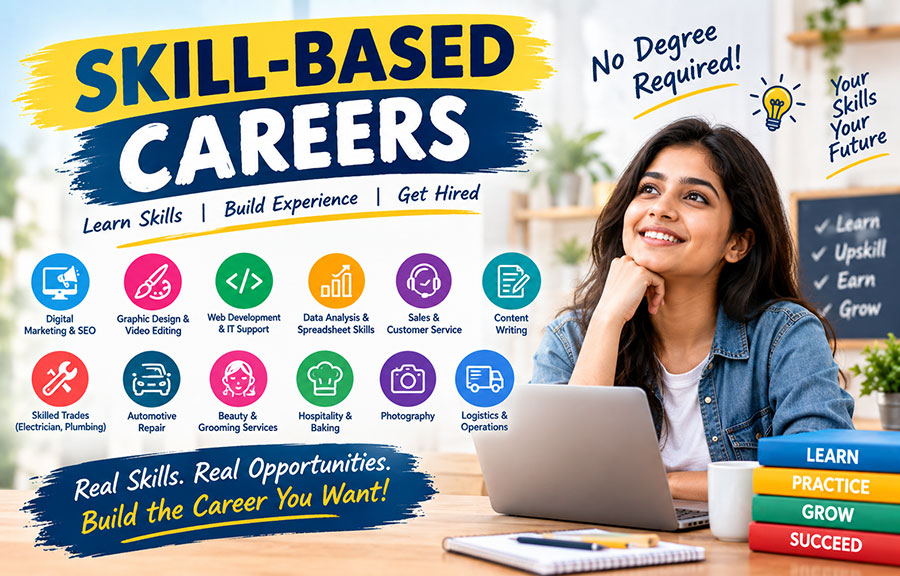
This guide to skill-based careers in India brings together digital, technical, creative, service and hands-on career options. You will learn what each path involves, which skills employers value, how to start learning, and how to turn practice into proof that you are ready for work.
What Is a Skill-Based Career?
A skill-based career is a job or business path where your practical ability is central to success. You might demonstrate that ability through a portfolio, practical test, recognised training, apprenticeship, work sample, customer feedback or experience on the job. Some roles require formal qualifications, licences or safety training, so always check the requirements for your chosen field.
Skill-based does not mean effortless or instant. It means focusing your learning on the abilities that real work requires, practising consistently and showing what you can do.
Best Skill-Based Career Options in India
There is no one perfect career for everyone. Think about what you enjoy, the tools you can access, the amount of time you can invest in training, and whether you prefer working with people, technology, ideas or your hands.
1. Digital Marketing and SEO
Digital marketers help businesses get discovered online through search engines, social media, email and paid campaigns. SEO-focused roles involve understanding what people search for and improving content and websites so they are useful and easy to find.
- Build these skills: Content planning, keyword research, social media, basic analytics, clear writing and campaign reporting.
- Start here: Create a sample content calendar, optimise a practice article and prepare a simple report explaining your decisions.
- Possible roles: SEO trainee, social media executive, digital marketing assistant or content coordinator.
2. Graphic Design and Visual Communication
Designers create social media posts, advertisements, thumbnails, brochures, presentations and brand materials. A well-organised portfolio often helps employers and clients judge your ability more clearly than a list of tools alone.
- Build these skills: Layout, typography, colour, visual hierarchy, design fundamentals and design software.
- Start here: Make six to ten original sample projects for different briefs. Explain the goal and the thinking behind each design.
- Possible roles: Junior graphic designer, production designer, presentation designer or freelance creative.
3. Video Editing and Motion Content
Video editors shape raw footage into clear, engaging stories for creators, brands, educators and agencies. Short-form videos, interviews, explainers and product videos all need good pacing and clean sound.
- Build these skills: Editing, audio cleanup, captions, pacing, file organisation and basic colour correction.
- Start here: Create a short showreel with several styles using footage you own or have permission to use.
- Possible roles: Video editor, short-form editor, assistant editor or content production assistant.
4. Web Development and Website Building
Website builders and developers create and maintain websites for businesses, creators and organisations. Some people begin with no-code tools; others learn HTML, CSS, JavaScript and related technologies.
- Build these skills: Website structure, responsive layouts, basic accessibility, troubleshooting and version control as appropriate.
- Start here: Build a personal profile page, a small business landing page and a useful multi-page project. Make them mobile-friendly.
- Possible roles: Website assistant, junior front-end trainee, CMS content publisher or freelance site builder.
5. IT Support and Computer Troubleshooting
IT support workers help people solve everyday computer, software, network and account problems. Patience and clear explanations matter just as much as technical knowledge.
- Build these skills: Operating systems, hardware basics, networking fundamentals, safe troubleshooting and customer communication.
- Start here: Practise in a safe home lab, document common fixes and consider reputable entry-level training.
- Possible roles: Help-desk trainee, desktop support assistant or technical support representative.
6. Data Analysis and Spreadsheet Skills
Many teams use spreadsheets and dashboards to organise information and spot patterns. Entry routes vary, but strong practical examples can help you demonstrate your ability.
- Build these skills: Spreadsheet formulas, data cleaning, charts, basic statistics and explaining findings in plain language.
- Start here: Use public or fictional data to build a clean spreadsheet and a short dashboard. Never publish private customer data.
- Possible roles: Reporting assistant, operations assistant or junior data-support role, depending on employer requirements.
7. Sales, Customer Service and Customer Success
People who listen well, explain clearly and follow through can build careers in sales and customer-facing work. Product knowledge, honesty and problem-solving create trust and can lead to greater responsibility.
- Build these skills: Communication, active listening, product understanding, follow-up, conflict handling and CRM basics.
- Start here: Practise explaining a product, handling common customer questions and writing a professional follow-up message.
- Possible roles: Sales associate, customer support executive, inside-sales trainee or customer success assistant.
8. Content Writing and Copywriting
Writers help businesses explain ideas, answer customer questions and communicate clearly. Useful work may include articles, product descriptions, email campaigns, website pages and social captions.
- Build these skills: Research, structure, editing, audience awareness, fact-checking and clear language.
- Start here: Write three to five original samples for different audiences. Cite trustworthy sources when needed and avoid copying other writers.
- Possible roles: Content writer, copywriting assistant, editorial trainee or freelance writer.
9. Electrician, Plumbing and Other Skilled Trades
Practical trades support homes, offices, construction and industry. These careers can reward reliability, technical knowledge, careful work and strong safety habits. Requirements and certification rules vary, so learn through a reputable vocational programme or supervised apprenticeship.
- Build these skills: Tool handling, measurement, fault diagnosis, customer communication and safety procedures.
- Start here: Research recognised training providers and apprenticeship routes in your area. Do not perform dangerous electrical or mechanical work without proper training and supervision.
- Possible roles: Apprentice electrician, plumbing assistant, maintenance trainee or technician helper.
10. Automotive Service and Repair
Vehicles need routine maintenance, diagnostics and repairs. As vehicles and workshop equipment evolve, technicians benefit from combining hands-on experience with ongoing technical learning.
- Build these skills: Maintenance basics, tool safety, diagnostics, attention to detail and service documentation.
- Start here: Look for structured vocational training or a supervised workshop apprenticeship.
- Possible roles: Workshop assistant, service technician trainee or vehicle maintenance helper.
11. Beauty, Grooming and Wellness Services
Hair styling, makeup, skincare services and grooming can become employment or small-business paths for people who enjoy client-facing work. Hygiene, consent, product knowledge and safe practice are essential.
- Build these skills: Technique, sanitation, consultation, time management and customer care.
- Start here: Compare training quality, practise under supervision and build a portfolio only with clients’ permission.
- Possible roles: Salon assistant, junior stylist, makeup assistant or independent service provider.
12. Hospitality, Food and Baking
Hotels, cafes, restaurants and catering businesses need people who can work carefully, serve customers and maintain standards. Experience and dependable work habits can help you progress.
- Build these skills: Food safety, preparation, service, teamwork, time management and stock handling.
- Start here: Consider reputable hospitality training or an entry-level role that offers supervision and clear development.
- Possible roles: Kitchen assistant, baker trainee, barista, service associate or catering assistant.
13. Photography and Content Production
Photographers create images for products, events, portraits, food and online content. You can begin with accessible equipment, but composition, lighting, editing and client communication take practice.
- Build these skills: Composition, lighting, editing, file delivery and understanding a client brief.
- Start here: Create a small themed portfolio and practise delivering files reliably. Get permission before publishing people’s images.
- Possible roles: Photography assistant, product content creator or freelance photographer.
14. Logistics, Retail and Operations
Businesses rely on people who can manage stock, process orders, coordinate deliveries and keep operations organised. Digital tools and accurate records can help you stand out.
- Build these skills: Spreadsheet basics, inventory processes, attention to detail, teamwork and clear communication.
- Start here: Learn basic stock and order workflows and look for entry-level roles with training.
- Possible roles: Inventory assistant, warehouse associate, dispatch coordinator trainee or retail operations assistant.
How to Choose the Right Skill for You
Instead of choosing only because a career is trending, score each option against five practical questions:
- Interest: Would I be willing to practise this even when it becomes difficult?
- Access: Can I access the equipment, internet, tools or training I need?
- Demand: Are real employers or customers paying for this work in my area or online?
- Proof: Can I build a sample, portfolio or practical demonstration?
- Fit: Does the daily work suit my strengths, schedule and preferred working style?
Choose one main skill first. Learning five unrelated skills at once can make it harder to become employable in any of them.
A Practical 90-Day Plan to Build Job-Ready Skills
- Days 1–15: Explore and choose. Read job descriptions, compare training options and choose one focused skill. Write down the tasks employers repeatedly ask for.
- Days 16–45: Learn and practise. Follow a structured learning plan and practise regularly. Use free or affordable resources before committing to an expensive course.
- Days 46–65: Build proof. Complete two or three realistic projects, practice tasks or supervised assignments. Keep your work organised and explain your contribution honestly.
- Days 66–75: Prepare your profile. Create a clear CV, portfolio or work sample page. Highlight skills, projects, training, languages and relevant experience.
- Days 76–90: Apply and improve. Apply to suitable entry-level roles, apprenticeships, internships or small paid projects. Ask for feedback, practise interviews and improve your weakest area.
This is a flexible starting plan, not a promise of employment in 90 days. The time needed depends on the field, your starting point and the amount of practice you can do.
Do You Need a Certificate?
A certificate can show that you completed training, and some occupations require recognised qualifications or licences. In other fields, employers may place more weight on practical tests, work samples and experience. Before paying for a course, check what local employers actually request, review the syllabus, ask about hands-on practice and verify the provider’s claims independently.
How to Get Your First Job Without Much Experience
- Make a simple, honest CV that puts relevant skills and projects near the top.
- Use a portfolio or work samples when the field allows it.
- Apply for trainee, assistant, apprenticeship and junior roles—not only jobs labelled “experienced.”
- Customise each application and explain how your skills match the tasks in the job description.
- Practise describing a project: the goal, what you did, the tools you used and what you learned.
- Ask teachers, trainers, previous supervisors or clients for references when appropriate.
Beware of Fake Job and Training Promises
Be cautious of anyone who guarantees a high salary or a job in exchange for an upfront payment, pressures you to act immediately, asks for sensitive banking details, or refuses to explain the work and terms. Verify employers and training providers independently, read contracts carefully, and never misrepresent your experience. Legitimate opportunities should have clear responsibilities and transparent conditions.
Frequently Asked Questions
Which skill-based career is best in India?
There is no universal best option. Digital skills, technical support, design, sales, skilled trades, hospitality and operations can all suit different people. Compare local demand, training access, working conditions and your interests before choosing.
Can I get a job with skills but no experience?
It is possible to enter some fields through trainee roles, apprenticeships, internships or junior positions. Build sample projects, practise practical tasks and apply for roles that match your current level.
Are online courses enough to get a job?
Courses can help you learn, but they are rarely a guarantee. Combine learning with practice, work samples, feedback and an understanding of the tasks employers expect.
How many skills should I learn at once?
Start with one main job skill and add supporting skills that make you more effective. For example, a designer can also learn client communication, file management and basic presentation skills.
Can a skill-based career grow over time?
Yes. With experience, continued learning and reliable work, you may progress into specialist, supervisory, freelance or business-owner roles. Growth depends on the field, performance and available opportunities.
Final Thoughts: Start Small, Practise Consistently
You do not need to have your entire future figured out before taking the first step. Pick a practical skill, learn from trustworthy sources, practise on real-world tasks and collect evidence of what you can do. A thoughtful portfolio, reliable work habits and a willingness to keep improving can help you move from learning to earning—one step at a time.