
Digital Marketing Consultant & Growth Strategist
Running a small business means making every hour and every rupee count. You may have a great product, dependable service, and loyal customers, but reaching new people can still be a challenge. Digital marketing helps your business become easier to find, gives customers a reason to trust you, and keeps your brand in touch with the people who matter.
You do not need a huge advertising budget or a large marketing team to get started. The best approach is to choose a few practical activities, do them consistently, and measure what brings enquiries, visits, and sales. Here are 10 digital marketing strategies small businesses can use to build visibility and grow steadily.
Why Digital Marketing Matters for Small Businesses
Customers often search online before choosing a shop, service provider, restaurant, consultant, or local brand. A clear website, useful social media presence, helpful content, and genuine customer reviews can make that decision easier. Digital channels also allow small businesses to reach a focused audience instead of spending money trying to reach everyone.
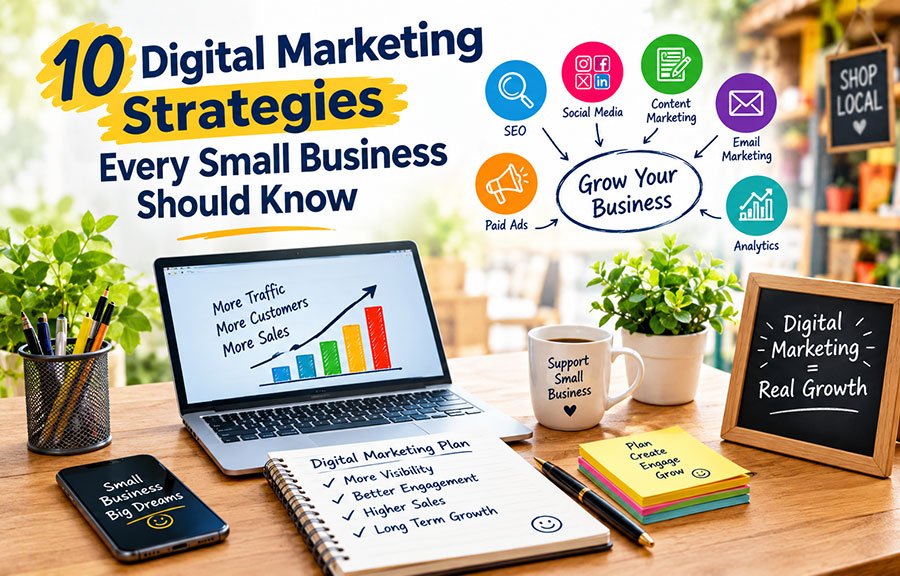
Think of digital marketing as a connected system: search helps people discover you, content answers their questions, reviews build confidence, and follow-up communication encourages them to return.
1. Build a Clear, Mobile-Friendly Website
Your website is often the first detailed impression a potential customer gets. Make it easy to understand what you offer, who you serve, where you operate, and how someone can contact or buy from you. Include clear service or product pages, working phone and WhatsApp links where relevant, business hours, and a simple enquiry form.
Many people browse on their phones, so check that pages load quickly, text is readable, and buttons are easy to tap. A simple website that answers customer questions is more useful than a complicated site that is difficult to navigate.
2. Improve Your Local SEO
Local search engine optimisation helps nearby customers discover your business when they look for products or services in their area. Keep your business name, address, phone number, opening hours, and service details accurate wherever your business is listed. Create useful pages for the locations you genuinely serve, and naturally include relevant local phrases in your website content.
If you serve a specific neighbourhood or city, explain what makes your service convenient for local customers. Avoid repeating city names unnaturally or creating pages for places where you do not actually operate.
3. Choose the Right Social Media Platforms
You do not have to be active on every social network. Choose platforms based on where your customers spend time and what kind of content suits your business. A visual brand may benefit from Instagram, while a B2B service provider may find LinkedIn more relevant. Local shops can use Facebook or Instagram to share updates, offers, new arrivals, and customer stories.
Post consistently, respond politely to comments and messages, and use social media to build relationships rather than only publishing sales promotions. A realistic schedule you can maintain is better than posting frequently for one week and disappearing for a month.
4. Create Helpful Content That Answers Customer Questions
Content marketing means sharing information that helps your audience make better decisions. A bakery could publish cake-ordering tips, a repair service could explain common maintenance problems, and a consultant could answer frequently asked questions. Useful articles, short guides, checklists, and videos can demonstrate your knowledge before a customer contacts you.
Start with questions customers already ask. Use clear headings, practical examples, and language your audience understands. Keep information accurate and update pages when prices, services, or processes change.
5. Use Email Marketing to Stay Connected
Email is a practical way to share updates, useful advice, product launches, seasonal offers, and reminders with people who have chosen to hear from you. Build your list through genuine sign-ups on your website, at your shop, or during a customer interaction. Explain what subscribers can expect and make it easy to unsubscribe.
Keep messages focused and personal. Instead of sending the same promotion every week, share information that gives customers a reason to open your emails. Respect consent and applicable privacy and anti-spam rules.
6. Encourage Genuine Customer Reviews
Reviews help potential customers understand what it is like to work with your business. After a successful purchase or service, invite customers to leave honest feedback on suitable platforms. Make the process simple by sharing a direct review link or a small instruction card.
Thank customers for positive feedback and respond calmly to criticism. If someone raises a genuine issue, acknowledge it and explain how you will try to resolve it. Never buy fake reviews or pressure customers to provide only positive comments.
7. Run Small, Targeted Paid Advertising Campaigns
Paid search and social media ads can help you reach people who are actively looking for a product or who match a relevant audience. Start with one clear goal, such as phone calls, website enquiries, store visits, or online purchases. Choose a limited location and audience, write a direct message, and send people to a page that matches the advertisement.
Set a budget you can afford to test, track the results, and avoid increasing spending until you understand which ads are bringing valuable leads or sales. Clicks alone do not tell you whether a campaign is profitable.
8. Make Short, Useful Videos
Short videos can show your product in action, introduce your team, explain a process, answer a common question, or share a quick customer tip. You can begin with a smartphone, natural lighting, and clear sound. A genuine demonstration often feels more convincing than a heavily produced advertisement.
Keep each video focused on one idea. Add captions so viewers can follow along without sound, and include a simple next step when appropriate, such as visiting your website or contacting your business.
9. Build Partnerships and Use Local Online Communities
Connect with complementary businesses, community groups, local creators, and professional networks whose audiences may benefit from what you offer. A fitness studio might collaborate with a healthy food outlet, while a wedding photographer could partner with event planners and venues.
Look for partnerships that provide real value to both sides. Participate helpfully in local online groups, follow community rules, and avoid posting repetitive promotional messages. Trust grows when people see you contributing, not just selling.
10. Track Results and Improve Your Marketing
Digital marketing becomes more effective when you understand what is working. Review website visits, search queries, calls, form submissions, email engagement, social media interactions, and sales. Use analytics tools and campaign tracking where appropriate, while respecting customer privacy and consent.
Connect each activity to a business goal. If a post receives many likes but no enquiries, it may not be reaching the right audience. If a local search page brings relevant calls, improve that page and consider creating related helpful content. Make one change at a time so you can understand its effect.
A Simple Digital Marketing Plan for the First 30 Days
| Time | What to focus on | Practical action |
|---|---|---|
| Week 1 | Online foundation | Review your website, contact details, mobile experience, and local business listings. |
| Week 2 | Visibility and content | Choose one or two social platforms and publish helpful content answering customer questions. |
| Week 3 | Trust and follow-up | Invite honest reviews and create a permission-based email sign-up process. |
| Week 4 | Measurement | Review enquiries, calls, traffic, and sales; decide what to improve or test next. |
Common Digital Marketing Mistakes to Avoid
- Trying to use every platform instead of focusing on the channels your customers use.
- Posting only promotional messages without answering questions or offering useful information.
- Ignoring website speed, mobile usability, or outdated contact details.
- Spending on ads without a clear goal, budget limit, or way to measure results.
- Buying followers or fake reviews, which can damage trust.
- Expecting instant results instead of building consistency and learning from performance.
Frequently Asked Questions
What is the best digital marketing strategy for a small business?
There is no single best strategy for every business. A useful starting point is a clear mobile-friendly website, local SEO, genuine customer reviews, and one social media channel that your target customers use. Choose based on your audience, goals, and budget.
Can a small business do digital marketing with a limited budget?
Yes. You can begin with accurate business listings, helpful website content, organic social media posts, customer reviews, and permission-based email updates. Paid advertising is optional and can be tested later with a controlled budget.
How long does digital marketing take to show results?
It depends on the channel, competition, audience, and consistency. Some paid campaigns can generate visits quickly, while SEO and content marketing generally take longer to build visibility. Track meaningful enquiries and sales rather than expecting every activity to produce immediate results.
Which social media platform should a small business use?
Choose the platform your customers already use and that fits your product or service. Start with one or two channels, publish useful content regularly, and review whether they generate conversations, enquiries, or sales.
How much should a small business spend on digital marketing?
Set a budget that fits your cash flow and business priorities. Begin with low-cost improvements, decide what result you want from any paid campaign, and test in small amounts. Increase spending only when you can see that the activity is producing worthwhile outcomes.
Final Thoughts
Digital marketing does not have to be complicated for a small business. A useful website, local visibility, helpful content, genuine customer relationships, and regular measurement can create a strong foundation. The most effective strategy is one you can manage consistently and improve over time.
Start with the customers you want to reach and the problem you help them solve. Choose a few strategies from this list, pay attention to the results, and build from there. Steady, thoughtful marketing can help your business earn trust and grow without wasting its limited resources.